The dreaded wedding invitation. It sits on your desk, collecting dust and moisture from the beads of sweat that drip down your face whenever you contemplate what to wear to the irksome event. It’s stressful enough thinking of the endless traditions that must be observed, the tedious toasts, the strange family members you’re doomed to meet, the dances you’ll have to endure… then throw in choosing an appropriate outfit, and it’s a wonder anyone makes it to the wedding without experiencing a psychotic break first.
We can’t do much about the toasts and eccentric relatives, but we can make sure you’re properly suited and booted for the occasion. Below is a basic guide to all kinds of men’s wedding attire – follow these rules, and you’ll be looking so good the bride will be second-guessing her choices.
Black Tie/Formal
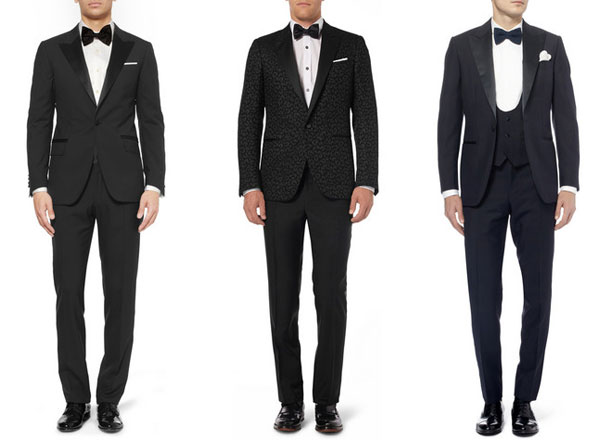
The tuxedo is the cornerstone of men’s wedding dress. Though customs and conventions have evolved over time, black tie remains the standard for formal attire so it’s essential to get it right. Weddings at their most formal may request white tie or full evening dress, but that’s an increasingly rare demand. These days, a formal wedding is most likely to require black tie – aka a basic tuxedo.
- Suits: A tuxedo consists of a black (or dark navy) wool dinner jacket with matching trousers. The jacket will have satin or grosgrain facings on its lapels and buttons, while the trousers will have a stripe or braid in matching material running along the outseam. The jacket should have a peak lapel or shawl collar, and no vents. The trousers should have flat fronts and no belt loops.
- Shirts: As a general rule, turn down collars are more appropriate for black tie, while wing collars are better suited to white tie. The buttons may either be concealed (a fly front) or on show (a French placket). The shirt front can be plain if you favour a cleaner look, pleated if you want something more fanciful, or made from a subtly textured Marcella fabric.
- Shoes: The most traditional form of black tie footwear is pumps with a satin or silk bow on top, but they’re a rare sight these days. Opt instead for simple black leather lace-ups (patent, if you want to make more of a statement) with no broguing. Simplicity is key here – the fewer the details, the more formal the shoes.
- Accessories: Begin with the bowtie – it’s a must, and yes, you should be able to tie it yourself. The clip-on was cute when you were eleven, but now it’s time to be an adult. Match the material of your bowtie to the facing of the suit. Wearing a waistcoat or cummerbund (make sure the pleats are facing up) is optional, but adds a nice touch. Finish off the look with tasteful cufflinks and, if you want to stand out, a pocket square or silk scarf.
Semi-Formal
Semi-formal dress is more and more becoming a popular request on wedding invitations. As its name implies, it is a more relaxed dress code than black tie, but it is still far from casual. Think of a semi-formal wardrobe as elegant, sophisticated and neat, but not as dressy as a tuxedo. As much as we love the Bond look, it’s too much for a semi-formal event.
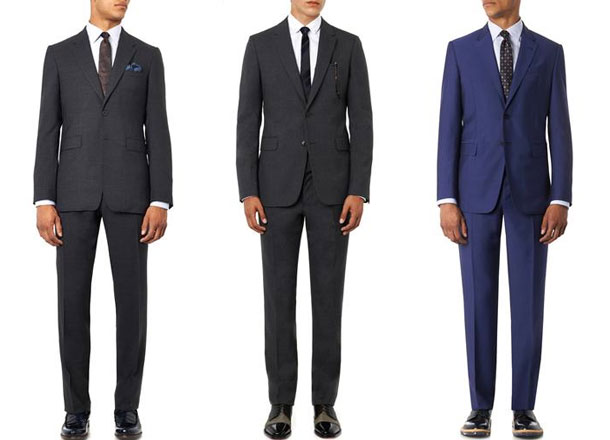
- Suits: A dark suit is the foundation of a semi-formal look. Black, navy and charcoal grey are all acceptable options. During the day, a lighter suit can be worn (but keep everything else towards the more conservative end of the spectrum).
- Shirts: Stick with the basics. It’s hard to go wrong with a solid colour, but you may be able to get away with a subtle – emphasis on subtle – pattern. Traditional hues are easiest to pull off. Make sure the shirt is crisp, clean and pressed.
- Shoes: Your shoes should be dressy, but patent leather should be saved for your tux. Oxfords are the go-to choice for a semi-formal ensemble, and monk straps can be worn for something a little bolder. Whatever you choose, make sure your shoes are clean, well-polished and looking their best.
- Accessories: Though semi-formal is a smart dress code (“formal” is in the name, after all), it leaves some room for creativity and interpretation. Personal touches are welcome, but should be conservative. Never upstage the wedding party.
Cocktail/Lounge Suit
As we continue to head down the formality scale, you have increasing freedom to experiment with your look. Tailor your outfit to the season and time of day. Suits in heavier materials are more appropriate for
winter, while suits in lighter materials can be worn in
summer. For night-time weddings, stick to dark colours. For daytime weddings, you can venture into lighter territory. When in doubt, ask the host what s/he prefers – it’s the easiest way to ensure you get it right.
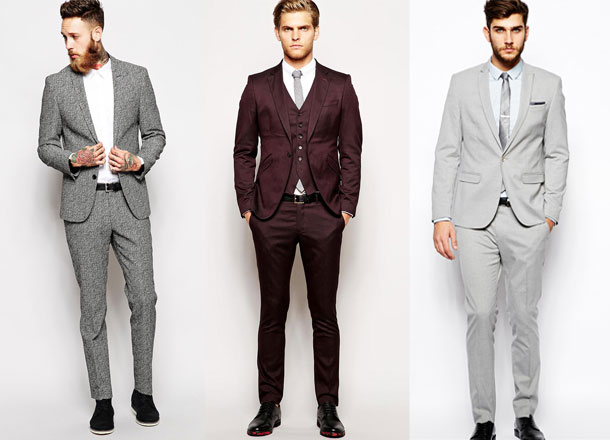
- Suits: Have we mentioned the dark suit yet? Yes, but we’re one to try and bend the rule from time to time. Keep it sharp and slim. If you’re feeling adventurous and know the soon-to-be-married folks would appreciate your dapper dressing, you can venture into a more unconventional shade like burgundy or a barely-there pattern.
- Shirts: Follow the semi-formal rules – a simple, solid colour is the easiest option, but a low-key pattern can work (as long as the suit isn’t also patterned). You have more room for originality here, just keep in mind that wedding photos are forever – you do not want to be remembered as the guy who wore salmon pink polka dots.
- Shoes: Again, the rules of semi-formal still apply. Your shoes should be leather, dark and well taken care of. If you’re worried about dressing too far down, steer clear of details and visible stitching. Loafers may be appropriate provided they are smart.
- Accessories: A tie is still a must. Some play with colour or pattern is allowed, but keep it classy. Don’t go big with the suit, shirt and tie – pick one place for boldness and stick with it. Accessorize with cufflinks, a watch or a pocket square.
Casual/Tropical Wedding
Here’s where the casual suit comes into play. Yes, it sounds like an oxymoron, but yes, it exists. Spring and summer weddings, daytime weddings, and weddings held in tropical locations all demand a dress code that is much less starched, yet retains a certain chicness. Much of the change happens in the material and structure of the suit, rather than the style itself.
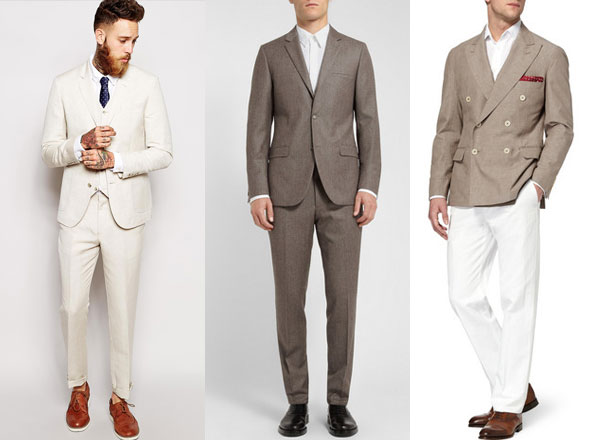
- Suits: Typically, the more luxurious a material looks or feels, the more formal it is. A casual suit will be made from fabric with a more open weave and more texture. Think cotton and linen. Regarding structure, less structure = less formal. The most casual jackets will have an unstructured chest with no shoulder pads and no lining. If you really want to test the limits of the casual suit, mix and match the jacket and trousers.
- Shirts: Embrace the opportunity to go a little louder while remaining conscious of not upstaging the guests of honour. The bride will be very angry if you look better than her husband, and an angry bride is not a monster you want to face. As long as your shirt won’t require you to stop a charging bride with a tranq gun, you’re free to get a little playful.
- Shoes: Finally, you can put your shoe collection to good use. At this point, most things will be acceptable as long as they still look sharp. Your gym shoes are out, but nearly everything else – Oxfords, derbies, brogues, wingtips, monk straps, loafers – is fair game. You may even be able to rock the barefoot look, if the wedding’s on a beach.
- Accessories: Wear a tie if your heart is seriously set on it, but otherwise there’s no need to restrain your neck. Save the tie for another occasion and undo the top button or two of your shirt. A casual wedding is also prime time to experiment a little more with your accessories, so pull out a statement pocket square or strap on an eye-catching watch.
Country Wedding
“Country” doesn’t mean cowboy boots or anything you’d wear to trek down a mountain, but it does mean you can relax as much as possible while still looking thoughtfully put-together. Opt for something comfortable and stylish in a laidback way.
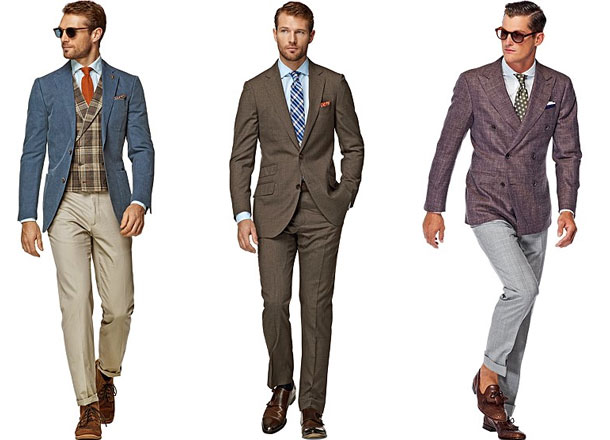
- Suits: Time to break out the colours. You can stick with the basics if you want, but a country wedding is also a welcome opportunity to venture into pale greys and blues, as well as more noticeable patterns. Something light – like cotton, linen or twill – and softly structured is best. If you want to forego the full suit entirely, separates can work at this level of informality. Try a simple blazer and dress pants in beige, blue, cream or grey.
- Shirts: Did someone say colours and patterns? Someone did, and that someone was us. Get creative. A plain shirt will serve you well, but something a little more audacious is a refreshing way to mix up standard wedding attire. If you do go the daring route, keep your accessories minimal and tasteful to balance it out.
- Shoes: Your shoes should stay neutral, but there’s no need for them to be stuffy. Anything from a smart loafer and beyond is a suitable choice as long as you’re comfortable and it doesn’t look like you robbed a tuxedo rental shop. Can you spend hours dancing drunkenly in your shoes and come home without complaining of sore feet? Wear them.
- Accessories: Sartorial stability is the important thing here. A sense of equilibrium must be maintained. Individuality is encouraged – so crack out the cool cufflinks, the playful pocket squares, the snappy socks – but don’t wear everything at once. Make sure a statement in one area is balanced out by restraint in another.